
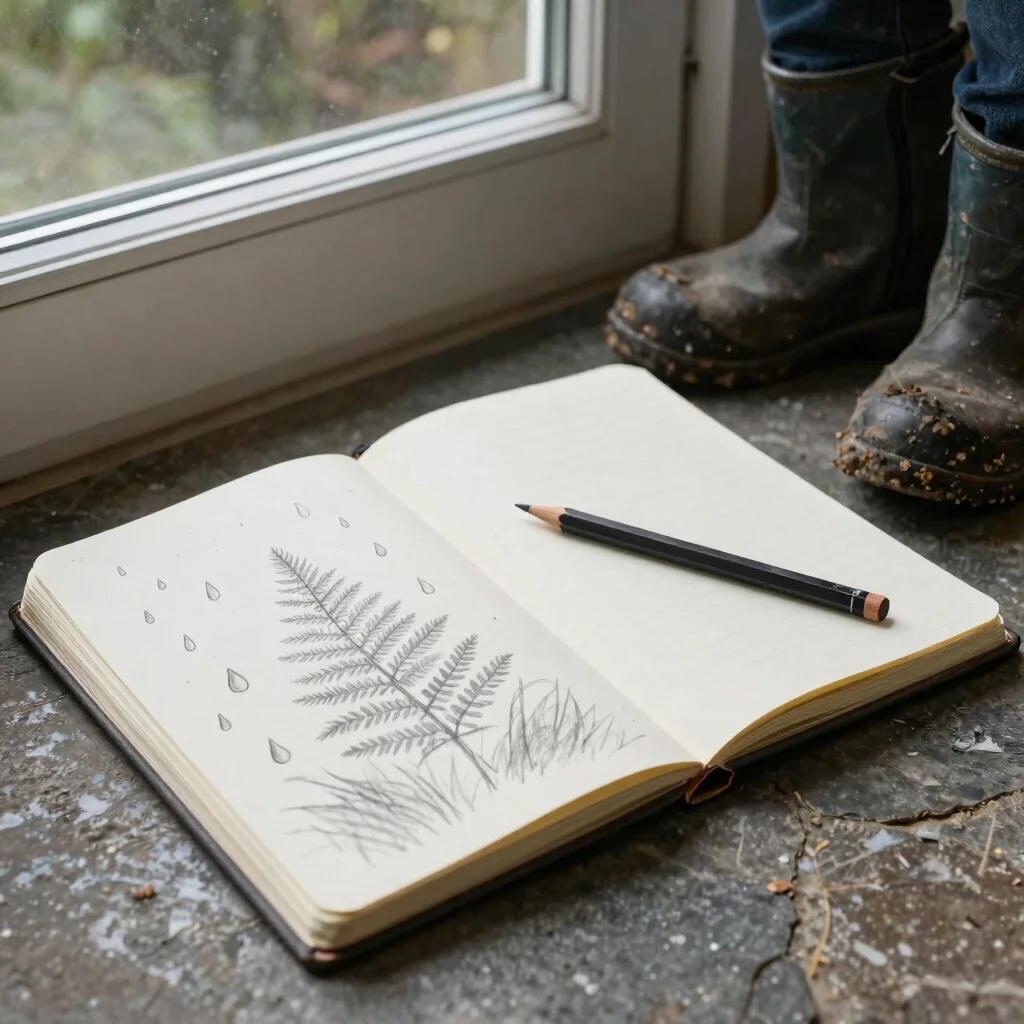
Some of our best outdoor learning starts with muddy shoes and a child who would rather look under a log than open a workbook. In the Pacific Northwest, a walk in drizzle is often the walk available, so I keep the plan small: notice one thing, bring home no living things, and save a page for it later.
Give the walk one question
A broad instruction like “look at nature” can be too much when everyone is cold and the path is slick. Try one question instead: Where does the rain collect? Which leaves are still holding water? What changed on the familiar trail since last week? A question gives a child somewhere to begin without deciding in advance what the right answer should be.
Leave plants, fungi, and small creatures where you find them, and check local guidance before exploring unfamiliar areas. A pocket notebook can record a sketch, a color, a texture, or a few dictated words once you are home and dry. The point is attention, not bringing a collection back to the table.
Make the page together
At home, let the child choose what to put on the page: a rough drawing of a fern, the sound of rain on a hood, or a sentence about the slippery boardwalk. Add the date and place if you want to revisit the same spot later. It does not need to look like a lesson display to count as learning.
Keep supplies ordinary
A pencil, a plain notebook, and a jacket that can take a little mud are enough to begin. If I share links to books or outdoor supplies, some may be affiliate links; Brooklyn Birch may earn a commission, and I will identify those links rather than presenting them as neutral recommendations. Try the walk with what you already have first.

